Saona Island Landscape Photography: Camera Tips and Best Shots
Saona Island is one of the most visually appealing destinations in the Dominican Republic. Its turquoise Caribbean water, white-sand beaches, palm trees, and tropical coastal landscapes create excellent opportunities for landscape photography.
Whether you use a professional DSLR, a mirrorless camera, or a smartphone, the island offers plenty of natural subjects to photograph.
However, capturing a beautiful landscape requires more than pointing a camera toward the sea. Lighting, composition, exposure, perspective, and equipment preparation all influence the final image.
This guide explains how to photograph Saona Island's landscapes, choose useful camera settings, capture different coastal scenes, and protect your photography equipment during an island excursion.
1. What Makes Saona Island Interesting for Landscape Photography?
Saona Island offers a combination of natural features that can create visually interesting photographs.
Some of the most appealing subjects include:
- Turquoise Caribbean water.
- White-sand beaches.
- Palm trees and tropical vegetation.
- Coastal horizons.
- Boats and natural landing areas.
- Shallow-water reflections.
- Cloud formations over the sea.
- Contrasts between vegetation, sand, and water.
These elements can be used to create wide landscape photographs, detailed compositions, minimalist images, and travel photographs.
The key is to look beyond the obvious beach view and notice how different natural elements interact within the frame.
2. Best Photography Subjects on Saona Island
Turquoise water and coastal horizons
The Caribbean Sea is one of the most recognizable visual features of Saona Island.
Try photographing the water from different angles to capture variations in color, texture, and reflections.
A low camera position near the shoreline can create a strong foreground, while a higher viewpoint may help show the relationship between the beach and the surrounding sea.
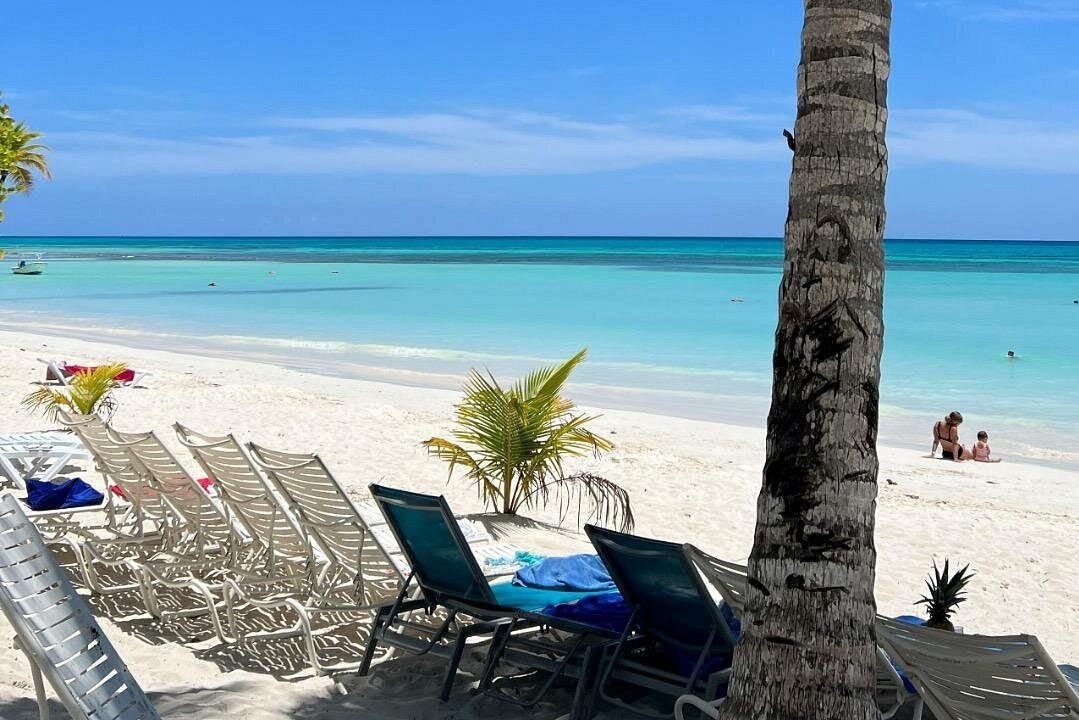
White-sand beaches
Bright sand can create a clean and simple composition.
Look for natural patterns, gentle shoreline curves, footprints, and contrasts between wet and dry sand.
Avoid including too many unrelated objects in the frame.
Palm trees and tropical vegetation
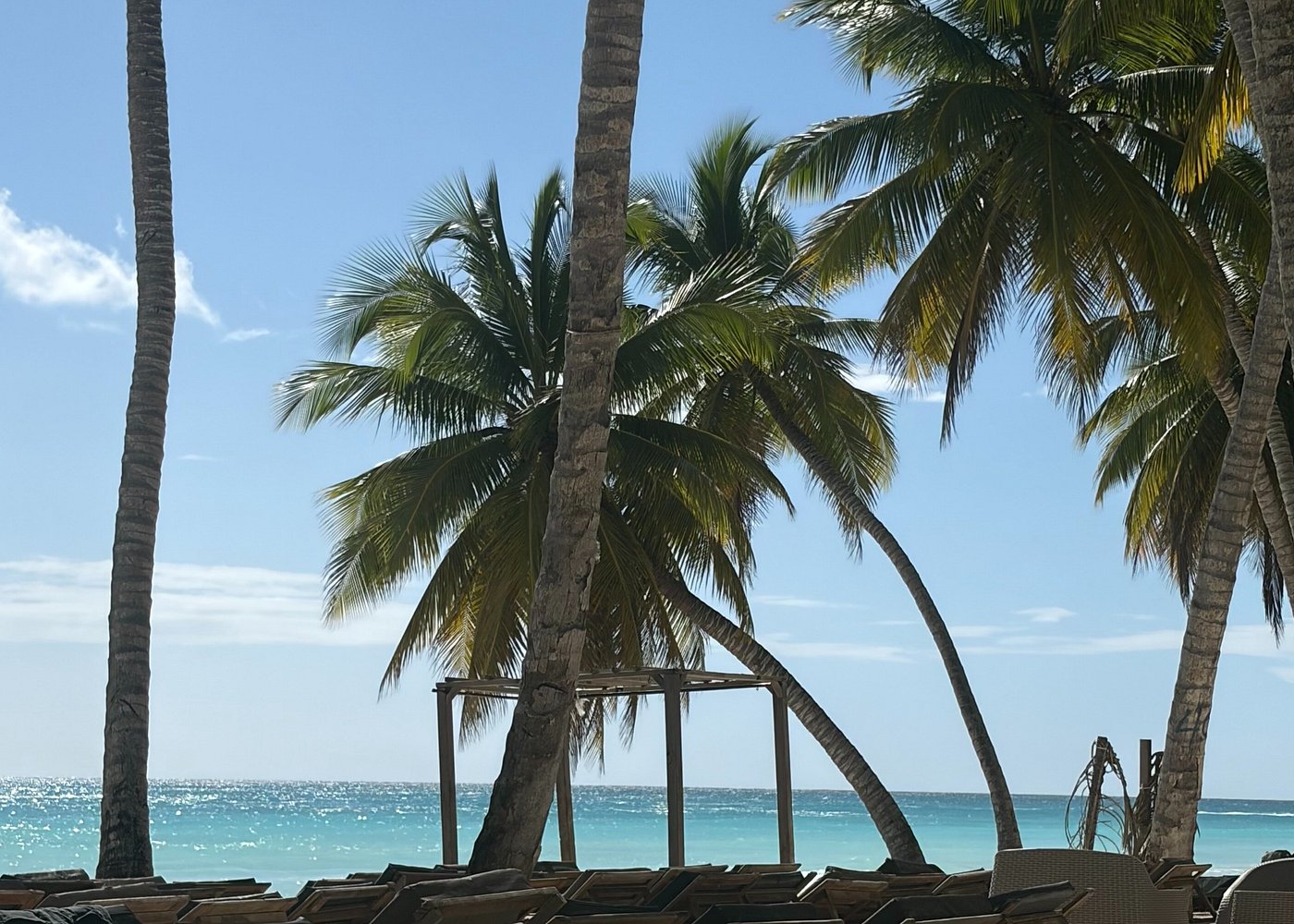
Palm trees can add depth and visual interest to landscape photographs.
Instead of photographing only a single palm tree, try using several trees to create layers within the composition.
A palm tree placed near the edge of the frame can also act as a natural framing element.
Boats and coastal details
Boats can provide a sense of scale and activity in a landscape image.
Photograph them from an appropriate visitor area and avoid entering restricted locations or approaching vessels without permission.
Natural reflections
Calm, shallow water may create attractive reflections of clouds, palm trees, or nearby objects.
Experiment with different angles and exposure settings to capture these details.
3. Understanding Light for Better Beach Photography
Light is one of the most important factors in landscape photography.
On a tropical island, strong sunlight can create bright highlights, dark shadows, and high contrast.
Understanding how light changes throughout the day can help you choose better photographic conditions.
Morning light
Earlier daylight can provide softer illumination than strong midday sunshine.
This may help when photographing palm trees, beach textures, and coastal landscapes.
Midday light
The sun can be intense around midday.
Bright sand and reflective water may create exposure challenges.
If photographing during this period, watch the highlights carefully and consider using exposure compensation.
Afternoon light
Later daylight may produce warmer tones and longer shadows.
This can add depth to photographs of beaches, vegetation, and coastal scenery.
Changing cloud conditions
Clouds can soften sunlight and create interesting patterns across the landscape.
However, lighting changes quickly, so check exposure before taking important photographs.
4. Useful Camera Settings for Saona Island
There is no single perfect camera setting for every beach photograph. The right settings depend on the light, subject, camera, and creative result you want.
The following suggestions provide a starting point.
Aperture
For wide landscape photographs, an aperture around f/8 to f/11 is often a useful starting point on cameras that allow manual aperture control.
This can help maintain detail across much of the scene.
For a subject-focused image with a blurred background, a wider aperture may be more appropriate.
ISO
Use the lowest practical ISO setting when light conditions allow.
A low ISO can help reduce image noise and preserve detail.
If light becomes limited, increase ISO as needed to maintain a suitable shutter speed.
Shutter speed
For stationary landscapes, a handheld shutter speed should be fast enough to reduce camera shake.
If you want to capture moving water with a creative effect, you can experiment with slower shutter speeds using a stable tripod where permitted and practical.
White balance
Auto white balance is convenient for everyday travel photography.
However, manually selecting daylight or adjusting white balance during editing may help create consistent colors across a series of photographs.
Focus
For landscape scenes, focus carefully on an important part of the composition.
If the foreground and background both need to appear sharp, learn how your camera's focus distance and aperture affect depth of field.
5. Smartphone Photography Tips
A professional camera is not necessary to capture attractive photographs on Saona Island.
Modern smartphones can produce detailed travel images when used carefully.
Try these techniques:
- Clean the camera lens before shooting.
- Use the main camera for high-quality images.
- Avoid excessive digital zoom.
- Tap the screen to set focus.
- Adjust exposure when bright sand or water appears overexposed.
- Keep the horizon straight.
- Use grid lines to improve composition.
- Avoid placing important subjects too close to the frame edges.
If your phone supports RAW photography, consider using it when you plan to edit images later.
6. Composition Techniques for Tropical Landscapes
Good composition helps turn an ordinary beach photograph into a more interesting image.
Rule of thirds
Imagine dividing the image into nine equal sections using two horizontal and two vertical lines.
Place the horizon or main subject near one of these lines rather than always positioning it in the center.
Leading lines
The shoreline, natural beach curves, or other visible features can guide the viewer's attention through the image.
Foreground interest
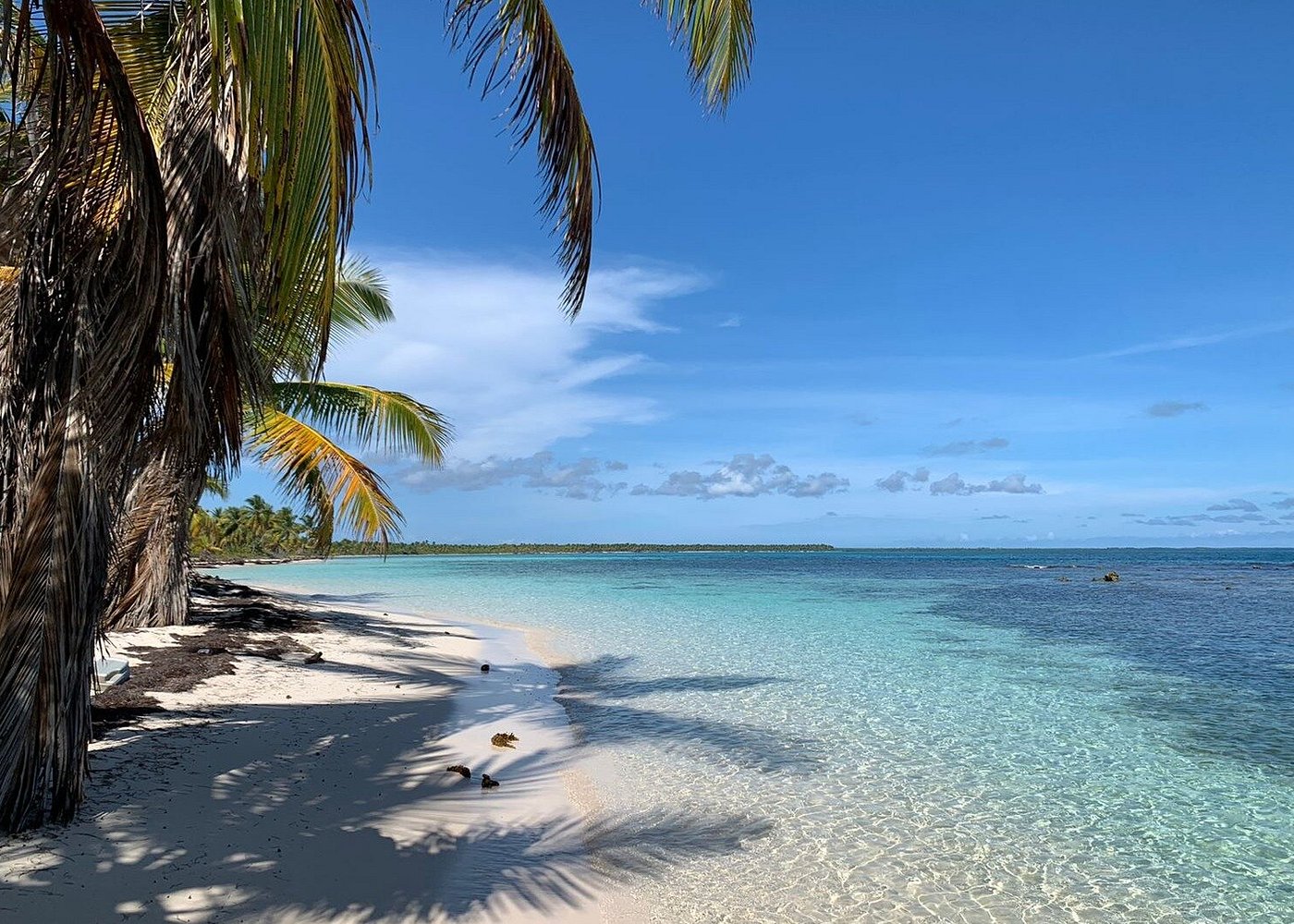
Include a foreground element such as sand patterns, a palm leaf, or a natural texture.
This can create depth and make the photograph feel more immersive.
Natural framing
Palm leaves or vegetation can frame a landscape naturally.
Use this technique carefully so the foreground does not block the main subject.
Minimalist composition
Sometimes a simple image is more powerful than a crowded one.
A clean horizon, a small boat, and a large area of turquoise water can create a balanced composition.
7. Capturing the Color of Caribbean Water
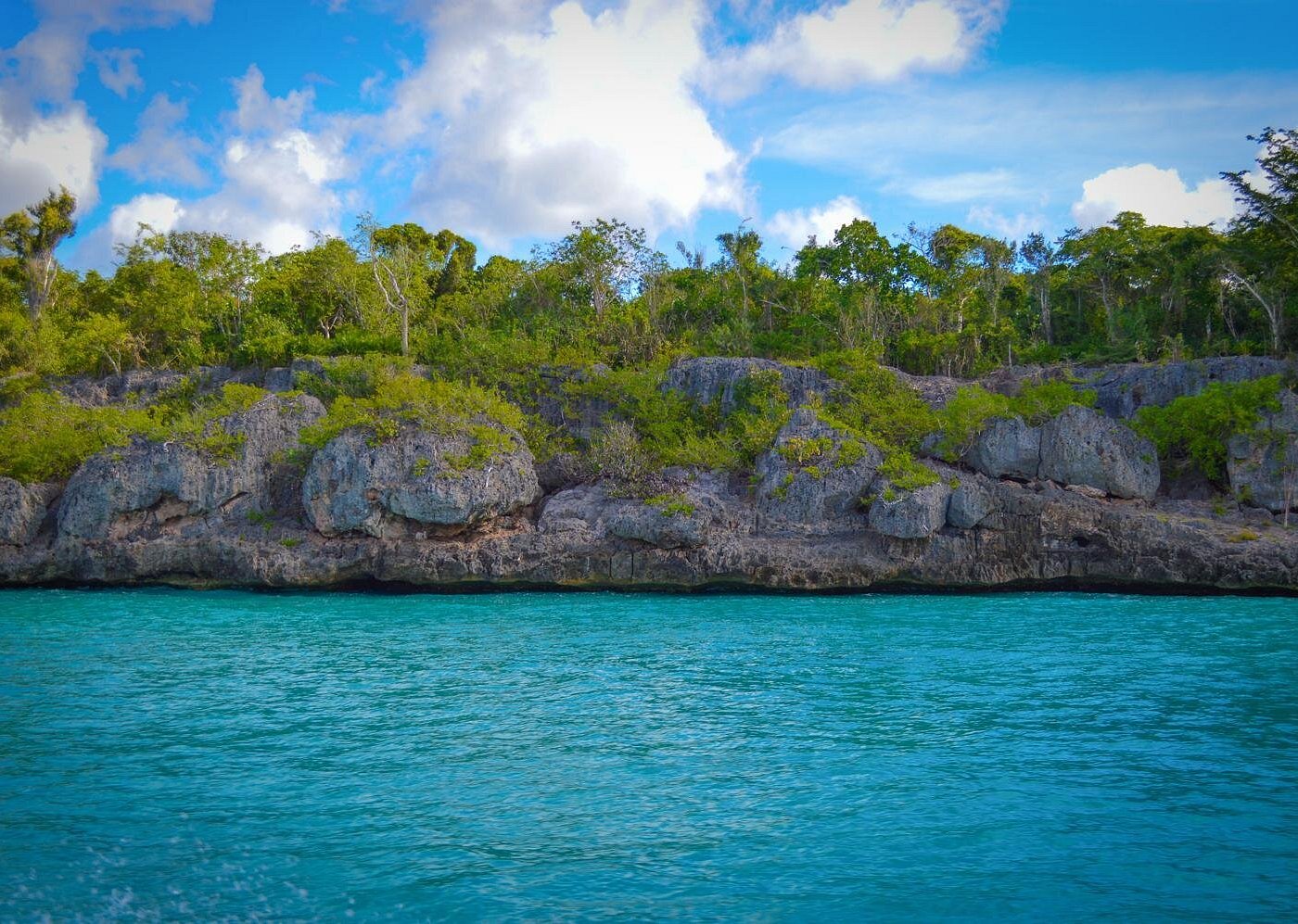
The color of the sea is one of the most attractive features of Saona Island.
However, water color changes depending on sunlight, depth, weather, reflections, and camera processing.
For better results:
- Photograph from different angles.
- Avoid excessive exposure that removes water detail.
- Include a section of beach for visual contrast.
- Use a polarizing filter when appropriate.
- Adjust saturation carefully during editing.
- Preserve natural-looking colors.
A polarizing filter can help reduce reflections from water and increase perceived color contrast in some conditions. Its effect depends on the angle between the camera, sun, and water surface.
Avoid excessive editing that makes the sea look unnaturally bright or artificial.
8. Photographing Palm Trees and Tropical Vegetation
Palm trees can become strong subjects in tropical landscape photography.
Try different approaches:
Wide composition: Photograph several palm trees together with the beach and sea.
Silhouette: Photograph a palm tree against a bright sky when the lighting creates a suitable contrast.
Detail photography: Focus on palm leaves, textures, or natural patterns.
Layered composition: Use foreground vegetation, middle-ground beach, and distant water to create depth.
Be careful not to damage vegetation or enter restricted areas to obtain a particular angle.
9. Essential Photography Equipment
The equipment you bring should match your photography goals and the practical conditions of the excursion.
EquipmentWhy it is usefulSmartphone or cameraMain photography deviceWide-angle lensCapturing broad landscapesPolarizing filterManaging certain reflectionsExtra batterySupporting longer shooting sessionsMemory cardStoring additional photographsLens clothRemoving dust and water spotsWaterproof bagProtecting equipment during boat travelSmall tripodSupporting selected long-exposure shots
Avoid carrying unnecessary equipment.
A lighter setup can make it easier to move around the beach and enjoy the excursion.
10. Protecting Your Camera From Sand, Water, and Sun
Beach photography presents several risks to electronic equipment.
Fine sand can enter camera mechanisms, while saltwater and moisture may damage electronic components.
Follow these precautions:
- Keep equipment inside a suitable protective bag when not in use.
- Avoid changing lenses in windy or sandy areas.
- Keep cameras away from splashing water.
- Never assume a camera is waterproof without checking its rating.
- Use a lens cloth designed for camera equipment.
- Avoid leaving equipment exposed to direct sunlight for long periods.
- Do not open memory card or battery compartments with wet hands.
- Follow the manufacturer's cleaning and storage instructions.
If your equipment gets wet, follow the manufacturer's guidance rather than using direct heat or attempting to open the device unnecessarily.
11. Common Landscape Photography Mistakes
Overexposing the beach: Bright sand can cause highlights to lose detail. Check your exposure before taking the photograph.
Ignoring the horizon: A tilted horizon can make an otherwise beautiful landscape look unbalanced.
Using too much digital zoom: This may reduce image quality.
Oversaturating colors: Excessive editing can make the water and sky look unnatural.
Photographing only from eye level: Try different camera heights and perspectives.
Ignoring the foreground: A photograph may look flat without a strong foreground element.
Carrying too much equipment: A heavy setup can make a boat excursion less convenient.
Failing to protect the camera: Sand, water, and salt exposure can damage equipment.
12. Editing Saona Island Landscape Photographs
Editing can improve a photograph, but the goal should be to preserve the natural appearance of the destination.
Useful adjustments include:
- Exposure correction.
- Highlight recovery.
- Shadow adjustment.
- White balance correction.
- Moderate contrast.
- Careful sharpening.
- Subtle color adjustments.
- Straightening the horizon.
Popular editing applications include Lightroom, Snapseed, and other photo-editing tools.
If you are editing a travel photograph for publication, avoid adding or removing environmental features in a way that misrepresents the location.
13. Responsible Photography on Saona Island
Beautiful photographs should never come at the expense of the environment or other visitors.
Keep these principles in mind:
- Respect wildlife and maintain appropriate distances.
- Do not move or damage natural objects for a photograph.
- Avoid disturbing other visitors.
- Stay within permitted areas.
- Follow local photography restrictions.
- Ask permission before photographing identifiable people.
- Use drones only when the applicable rules and permissions allow them.
A responsible photographer captures the beauty of a destination without damaging the place being photographed.
14. Frequently Asked Questions
Is Saona Island good for landscape photography?
Its tropical beaches, turquoise water, palm trees, and coastal scenery offer many interesting subjects for landscape photography.
What camera is best for photographing Saona Island?
A DSLR, mirrorless camera, or modern smartphone can all produce good results. Choose equipment that matches your experience and travel requirements.
What is the best lens for beach landscape photography?
A wide-angle lens is useful for broad coastal scenes. A standard zoom lens can provide additional flexibility for different compositions.
Can I use a tripod on Saona Island?
A small tripod may be useful for certain photographs, but check whether it is practical and permitted at your chosen location.
How do I photograph turquoise water naturally?
Use careful exposure, experiment with different angles, and avoid excessive saturation during editing.
How can I protect my camera during a boat trip?
Use a suitable protective bag, keep the camera away from splashing water, and avoid exposing it to sand or saltwater.
Are drones suitable for landscape photography on Saona Island?
Drone use should never be assumed to be permitted. Check the applicable rules, protected-area restrictions, and any required authorization before flying.
Conclusion
Saona Island offers excellent opportunities for capturing tropical landscapes, from turquoise water and white-sand beaches to palm trees and coastal scenery.
Better photographs come from understanding light, using thoughtful composition, choosing suitable camera settings, and protecting your equipment.
Whether you photograph with a professional camera or a smartphone, take time to explore different angles and natural details.
Most importantly, respect the island's environment and follow local rules. The best travel photographs are those that preserve the beauty of a destination without disturbing it.

Local explorer & expert guide in Boat Tour Samana.