Saona Island Plants: A Guide to Native Trees, Palms and Caribbean Coastal Vegetation
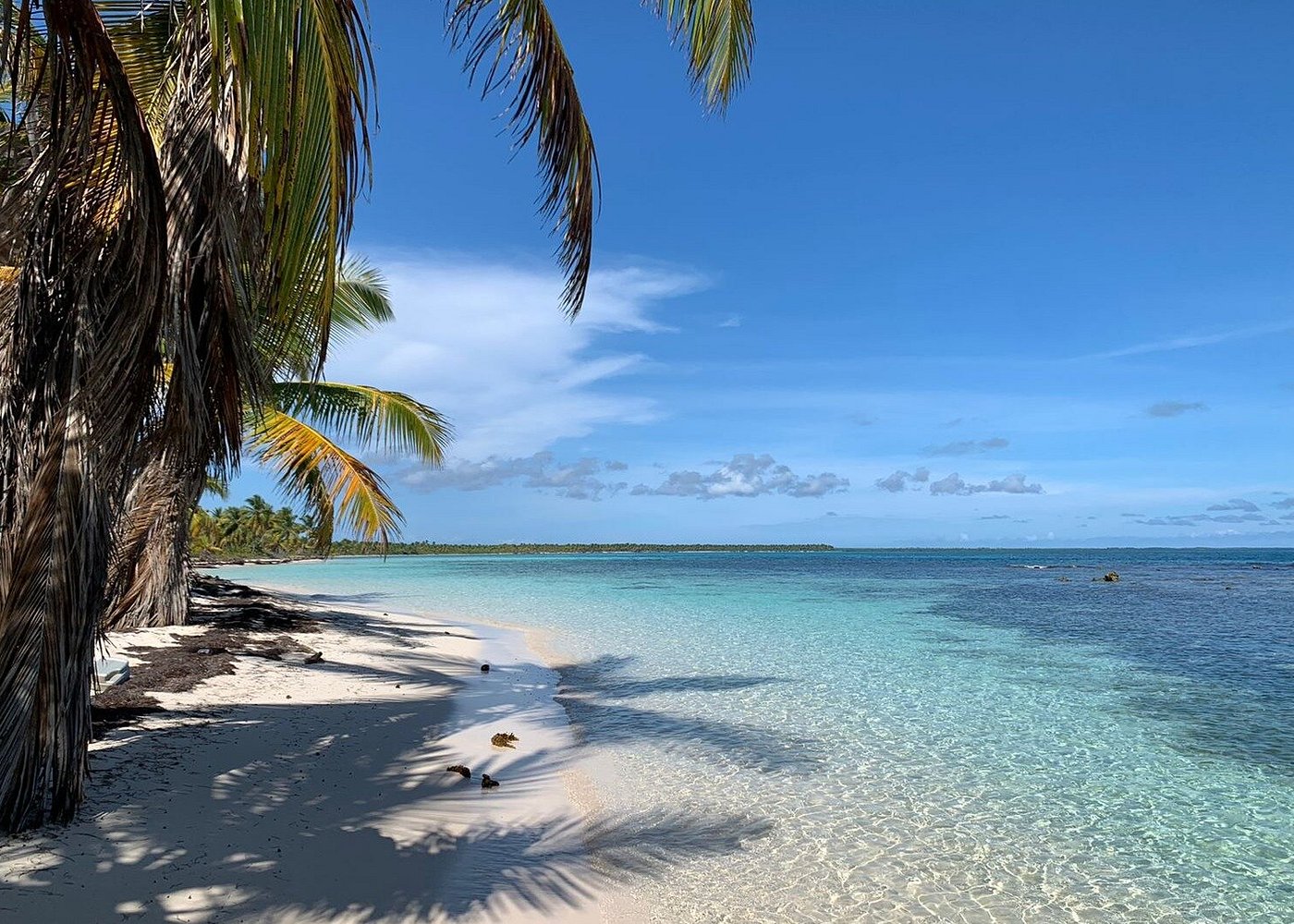
Saona Island is well known for its white-sand beaches, turquoise water, and tropical scenery. But beyond the coastline, another part of its natural beauty deserves attention: the island's vegetation.
From coastal trees and palms to mangroves and tropical forest plants, vegetation helps shape the landscape of Saona Island. These plants provide shade, shelter wildlife, protect parts of the shoreline, and contribute to the ecological richness of the wider protected area.
Saona Island forms part of Cotubanamá National Park in southeastern Dominican Republic. The wider park contains a variety of habitats, including dry forest, humid forest, mangroves, wetlands, and coastal environments. Botanical inventories for the protected area record hundreds of plant species, including native and endemic plants.
This guide introduces some of the plants associated with the region, explains the habitats where they grow, and shows why vegetation is an important part of Saona Island's natural heritage.
1. Understanding Saona Island's Natural Vegetation
Saona Island is not simply a collection of beaches and palm trees. Its natural environment includes several different vegetation communities.
The wider Cotubanamá protected area contains:
- Coastal vegetation.
- Tropical dry forest.
- Humid forest.
- Transitional woodland.
- Mangrove habitats.
- Wetlands and salt-tolerant vegetation.
- Underwater seagrass meadows.
These environments support different plant species because they experience different conditions.
For example, plants growing close to the sea must tolerate salt spray, strong sunlight, wind, and sandy or rocky ground. Plants farther inland may grow in forest environments with different soil moisture and shade conditions.
This variety gives the island and surrounding protected region a distinctive botanical character.
2. How Many Plant Species Grow in the Protected Area?
The wider Cotubanamá National Park is recognized for its botanical diversity.
Available inventories report hundreds of plant species in the protected area. One technical document reports 575 vascular plant species, with approximately 9.8% identified as endemic to Hispaniola.
Other public descriptions report different totals, reflecting differences in inventory dates and methods.
These figures refer to the wider protected area, not a species count for Saona Island alone.
The botanical richness includes trees, shrubs, palms, herbs, mangrove species, and other forms of vegetation.
For nature lovers, this means that the park's importance extends beyond its famous beaches and marine scenery.
3. Beach Grape: A Characteristic Coastal Plant
One of the recognizable coastal plants of the Dominican Republic is beach grape, scientifically known as Coccoloba uvifera.
It is a shrub or small tree commonly associated with tropical shorelines.
How to recognize beach grape
Look for:
- Broad, rounded leaves.
- A branching growth habit.
- Clusters of small fruits.
- A shape that can provide shade near coastal areas.
Its leaves can be large and leathery, helping the plant cope with exposed coastal conditions.
Why is beach grape important?
Beach grape contributes to coastal vegetation and can help stabilize sandy areas through its roots.
It also provides food and habitat resources for wildlife.
When you see coastal shrubs and trees along a tropical beach, remember that they are part of a natural system that helps the shoreline function.
4. Red Mangroves: Trees of the Coastal Wetlands
Mangroves are among the most important coastal plants in the Caribbean.
Red mangrove (Rhizophora mangle) is one of the mangrove species recorded in the wider Cotubanamá protected area.
It is especially recognizable because of its arching prop roots, which extend from the trunk and branches toward the ground or water.
Why are red mangroves important?
Red mangroves contribute to coastal ecosystems in several ways:
- Their roots provide shelter for small fish and other aquatic organisms.
- They help trap sediment.
- They create habitat for coastal wildlife.
- They contribute to shoreline protection.
- They store carbon in their vegetation and surrounding soils.
Mangrove forests are living coastal systems, not simply groups of trees growing in water.
Visitors should avoid walking through mangrove roots, breaking branches, or disturbing the surrounding habitat.
5. Other Mangrove Species in the Region
The wider protected area also includes other mangrove species.
Black mangrove
Black mangrove (Avicennia germinans) is adapted to saline coastal environments.
It can develop specialized roots that help the plant exchange gases in waterlogged soils.
Buttonwood mangrove
Buttonwood (Conocarpus erectus) is another coastal species associated with mangrove communities and nearby coastal habitats.
It can grow in areas exposed to salt and changing moisture conditions.
Why mangrove diversity matters
Different mangrove species tolerate different environmental conditions.
Together, they contribute to the structure and ecological function of coastal wetlands.
These habitats are particularly valuable because they connect land and sea environments.
6. Almácigo: A Native Caribbean Tree
Almácigo (Bursera simaruba) is a characteristic tree of the Caribbean.
It is known for its distinctive reddish, peeling bark, which can make it easier to recognize.
The tree is associated with tropical dry and seasonal forest environments.
What makes almácigo interesting?
- Its reddish bark stands out against surrounding vegetation.
- It is adapted to seasonal environmental conditions.
- It contributes to the structure of tropical woodland.
- Its branches and foliage can provide habitat for wildlife.
The tree is one of the species reported in descriptions of Cotubanamá National Park's flora.
7. Copey: A Tree of the Tropical Landscape
Copey (Clusia rosea) is another plant associated with the wider protected area.
It is an evergreen tree that can grow in tropical environments and is known for its thick leaves.
Copey is interesting because some members of the genus Clusia are adapted to challenging growing conditions.
The tree contributes to forest structure and provides natural cover for wildlife.
When exploring a forest environment, visitors may notice differences in leaf shape, size, and texture between tree species.
These features are part of how plants adapt to their surroundings.
8. Bayahonda: A Plant Adapted to Dry Conditions
Bayahonda, also called cambrón, is commonly associated with Prosopis juliflora in regional plant lists.
It is a drought-tolerant tree or shrub that can grow in dry and exposed environments.
Its role in the landscape
Bayahonda is associated with dry habitats and can tolerate conditions that are difficult for some other plants.
Its presence illustrates how vegetation changes between moist coastal areas and drier inland environments.
Do not assume that every tree or shrub you encounter on a Saona Island beach is bayahonda. Correct identification requires looking closely at its leaves, branches, and other botanical features.
9. Mahogany: A Valuable Native Tree
Mahogany (Swietenia mahagoni) is a Caribbean tree associated with the wider Cotubanamá region.
It is known for its valuable timber and historical importance in the Caribbean.
Mahogany trees can become large and contribute to the structure of forest habitats.
Their conservation is important because valuable timber species may face pressure from historical and modern exploitation.
Visitors should appreciate these trees as part of the natural heritage of the protected area rather than treating them as decorative objects or collecting plant material.
10. Guayacán: A Tree of the Caribbean Dry Forest
Guayacán (Guaiacum officinale) is a Caribbean tree known for its dense wood and slow growth.
It is associated with dry tropical environments and is included in plant lists for the wider Cotubanamá area.
Why is it important?
Guayacán represents the type of woody vegetation adapted to relatively dry conditions.
Its conservation matters because slow-growing trees can take a long time to recover after damage or removal.
If you encounter a tree believed to be guayacán, avoid cutting, marking, or collecting any part of it.
11. Guayiga: An Unusual Plant of the Region
Guayiga is a common name used for Zamia plants recorded in the Dominican Republic.
Unlike ordinary flowering trees, cycads belong to an ancient group of seed plants.
They have a distinctive appearance, with stiff leaves arranged in a crown.
Guayiga is particularly interesting to people who enjoy learning about plant evolution and biodiversity.
It should not be collected or handled. Some cycads contain toxic compounds, so visitors should not eat or experiment with unknown plant parts.
12. Palms and the Tropical Island Landscape
Palms are strongly associated with Saona Island's tropical image.
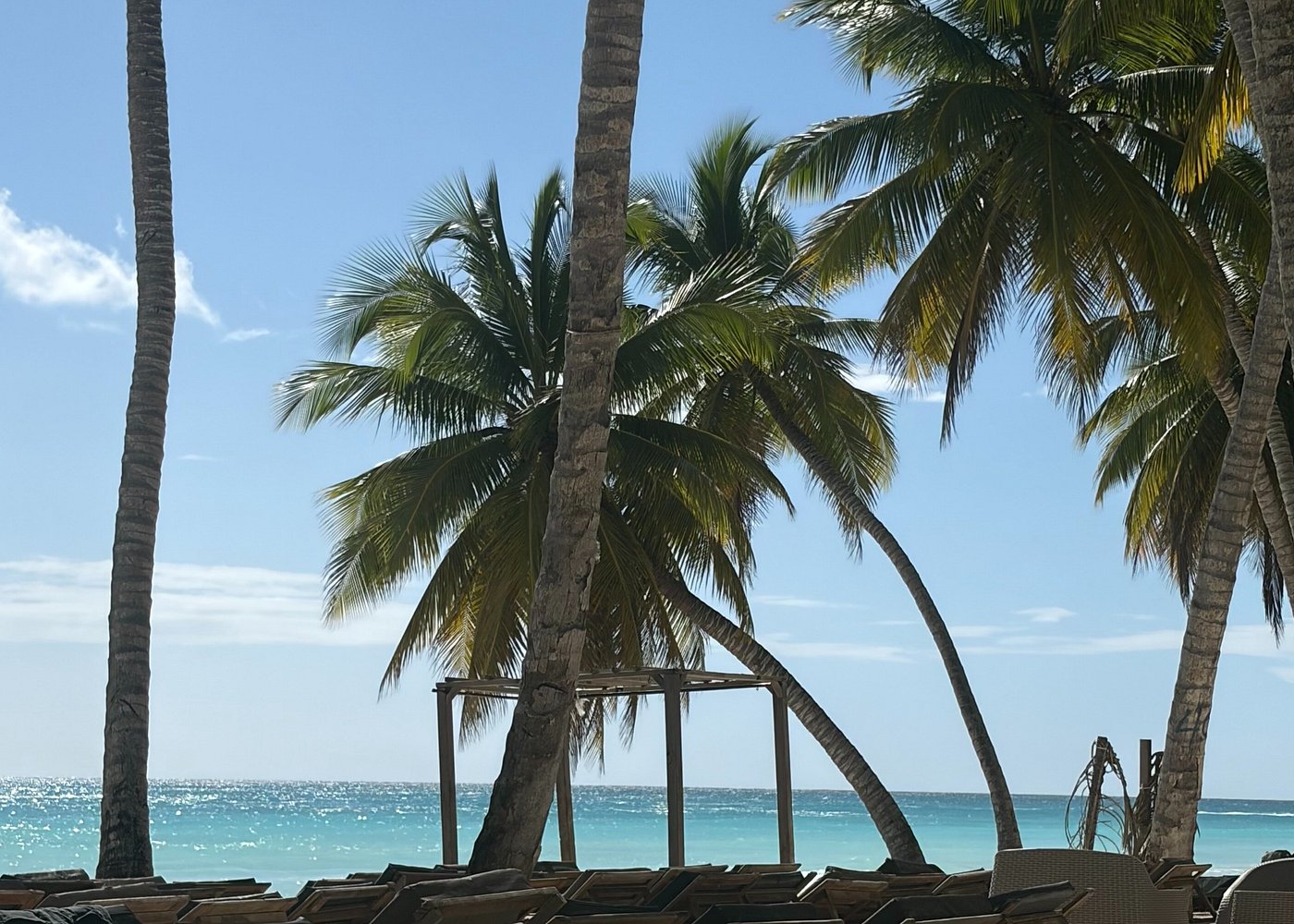
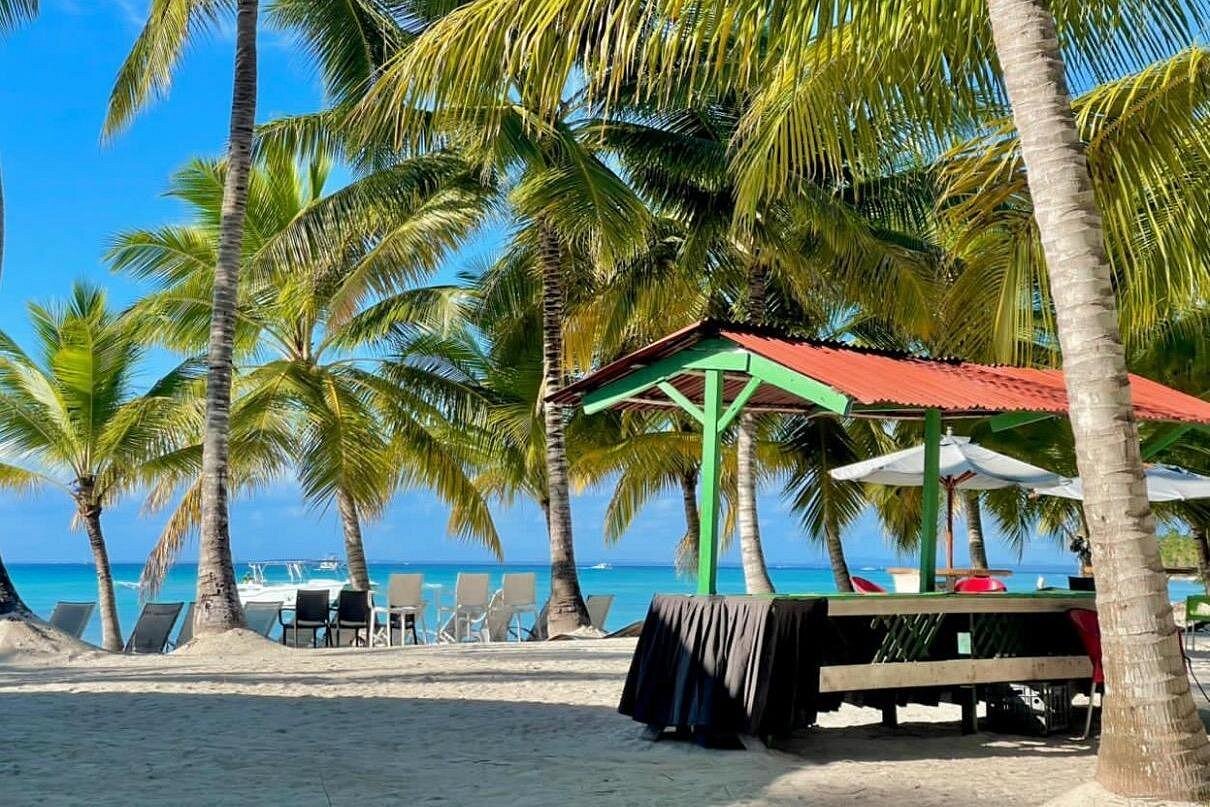
Coconut palms are especially visible in beach landscapes and contribute to the familiar Caribbean scenery.
The wider protected area also includes native palm species, such as the Hispaniolan royal palm (Roystonea hispaniolana) and other regional palms.
Why palms matter
Palms can provide:
- Food resources for wildlife.
- Nesting and resting structures for some animals.
- Shade and shelter.
- Vegetation structure in coastal and forest habitats.
Not every palm on the island should be assumed to be a native species. Coconut palms, for example, have a long history of cultivation and movement throughout tropical coastal regions.
13. The National Flower: Rosa de Bayahíbe
The Dominican Republic's national flower is known as Rosa de Bayahíbe (Pereskia quisqueyana).
It is a rare cactus species with leaves and flowers that may look different from the typical image of a cactus.
The species is associated with the Bayahíbe region and is important to Dominican botanical heritage.
It should not be presented as a plant that visitors can expect to find naturally along every Saona Island beach.
Because it is a conservation-sensitive species, visitors should never collect it or damage plants in an attempt to obtain a photograph.
14. Seagrass: Important Plants Beneath the Water
Not all important plants around Saona Island grow on land.
Shallow marine habitats in the wider protected region include seagrass meadows.
Species such as turtle grass (Thalassia testudinum) and manatee grass (Syringodium filiforme) are recorded in the park's marine environment.
Seagrasses are flowering plants adapted to living underwater.
Why seagrass matters
Seagrass meadows:
- Provide feeding areas for marine animals.
- Offer habitat for small fish and invertebrates.
- Help stabilize underwater sediments.
- Store carbon.
- Support the health of coastal ecosystems.
Seagrass is not seaweed. It is a true marine flowering plant with roots, leaves, and reproductive structures.
When swimming or snorkeling, avoid standing on or pulling up seagrass.
15. How Plants Protect Saona Island's Coastline
Coastal vegetation plays an important role in maintaining the island's natural environment.
Different plants contribute in different ways.
Root systems and sediment stability
Plant roots can help hold soil and sediment in place.
This is particularly important in coastal areas exposed to waves, currents, and wind.
Natural shelter
Trees and shrubs provide shade and shelter for wildlife.
They also create different microhabitats within the coastal landscape.
Habitat connections
Mangroves, coastal woodland, and seagrass beds connect different parts of the ecosystem.
These habitats support different life stages of many coastal organisms.
Natural landscape resilience
Healthy vegetation contributes to the ability of coastal environments to respond to natural disturbances.
However, plants cannot prevent every form of erosion or storm damage. Coastal ecosystems are influenced by many natural and human factors.
16. Best Ways to Observe Plants During a Saona Island Visit
You do not need to be a botanist to enjoy the island's vegetation.
A little observation can make your trip more interesting.
Try these simple activities:
Observe the coastline
Look at the differences between vegetation growing directly beside the beach and plants farther inland.
Notice leaf size, plant height, branching patterns, and exposure to wind.
Look for mangrove habitats
If your authorized excursion passes a mangrove area, observe the different root structures from a safe distance.
Do not enter the mangrove habitat unless the route specifically permits it.
Notice the palms
Compare the shapes of palm crowns, trunks, and leaves.
Remember that several palm species can have different appearances.
Photograph plant details
Take pictures of leaves, bark, flowers, and fruit without removing anything.
Close-up photographs can help you identify species later.
Ask knowledgeable local guides
A guide familiar with the local environment may help explain which plants are native, which are cultivated, and how the vegetation changes across habitats.
17. Responsible Plant Observation: What Visitors Should Avoid
Saona Island is part of a protected natural area. Visitors should treat its vegetation carefully.
Follow these basic principles:
- Do not break branches or remove leaves.
- Do not collect flowers, seeds, or fruits without permission.
- Avoid walking over young plants.
- Stay on permitted paths and visitor areas.
- Do not carve names into trees.
- Never light fires in vegetation.
- Avoid disturbing mangrove roots.
- Do not introduce seeds or plants from outside the protected area.
- Take all rubbish away with you.
A photograph is a better souvenir than a piece of a living plant.
18. Frequently Asked Questions
What plants grow on Saona Island?
The island is part of a wider protected area with coastal vegetation, palms, forest plants, and mangrove habitats. Species recorded in the wider Cotubanamá region include beach grape, almácigo, copey, bayahonda, mangroves, and several palms.
Are there native plants on Saona Island?
Yes. Saona Island is part of a protected region containing native Caribbean vegetation. However, the presence of a species in a park-wide inventory does not prove that it grows in every part of the island.
Are coconut palms native to Saona Island?
Coconut palms are a familiar feature of tropical beaches, but they have a long history of cultivation and distribution throughout tropical regions. Do not assume that every coconut palm is a naturally occurring native species.
Does Saona Island have mangroves?
Mangrove habitats are part of the wider coastal environment of the protected region. Visitors should observe them without disturbing their roots or surrounding habitat.
What is beach grape?
Beach grape (Coccoloba uvifera) is a coastal shrub or small tree known for its broad leaves and fruit clusters. It is commonly associated with tropical shorelines.
What is the national flower of the Dominican Republic?
The national flower is Rosa de Bayahíbe (Pereskia quisqueyana), a rare cactus species associated with the Bayahíbe region.
Are there plants underwater near Saona Island?
Yes. The wider protected marine area contains seagrass habitats, including turtle grass and manatee grass.
Can visitors collect plants or flowers?
Visitors should not collect or damage vegetation in the protected area. Follow park regulations and leave plants where they grow.
Are all the plants in this guide found directly on Saona Island?
Not necessarily. Some species are documented for the wider Cotubanamá National Park. Their presence on the island itself should be confirmed with island-specific botanical information.
Conclusion
The plants of Saona Island are an important part of the destination's natural identity.
Coastal trees, palms, mangroves, dry-forest vegetation, and underwater seagrasses contribute to the beauty and ecological function of the wider Cotubanamá protected area.
Learning about these plants can make a visit more meaningful. Instead of seeing only beaches and tropical scenery, visitors can begin to understand the natural systems that help support the island.
Whether you are walking near the coast, observing palms, or viewing mangroves from an authorized route, take time to appreciate the vegetation without disturbing it.
Protecting the plants means helping preserve the natural landscape that makes Saona Island such a special part of the Dominican Republic.

Local explorer & expert guide in Boat Tour Samana.